Learn
A criteria-driven method for valuing natural history collections
CollMan turns the qualitative question “how valuable is this collection?” into a structured, reproducible assessment based on 20 weighted criteria — peer-reviewed and openly available. Around that core the portal has grown to cover everything else a curator tracks: profile, curatorial activities, loans, publications, permits, anonymous benchmarking and external visibility.
Why CollMan
The challenge
In the case of a museum collection of paintings and works of art, it is valued. Single copies, e.g. paintings of famous painters, reach dizzying prices on the market. However, the same cannot be said of the existing nature collections.
Because how to estimate the value of prepared and pinned insects, plants dried a hundred years ago, more or less skillfully stuffed animals, collected microscopic preparations or finally a collection of nature photos? Although collecting various types of natural objects has a long tradition, it has never found such recognition in society as collecting archaeological artifacts, paintings, numismatics or philately.
The risk
Nature collections are very often exposed to destruction. Entomological collections, herbariums or stuffed animals stored in inappropriate conditions are easily damaged, either as a result of museum pests (insects, fungi) or as a result of mechanical damage. In this way, we often lose specimens that are priceless from a scientific point of view.
It is precisely for the proper protection and maintenance of these most valuable collections that state earmarked funds should be allocated to institutions that store these collections.
Why now
In the era of the rapid development of biological sciences, which we have recently observed, with the simultaneous huge decline in the biodiversity of our planet, considered to be one of the next mass extinctions, the collected nature collections, especially those of a scientific nature, i.e. with full documentation, are gaining a completely new dimension and meaning. After all, museum specimens include species that have become extinct or have become so rare that obtaining them is practically impossible.
In the accumulated and so far unprepared collections one can find taxa new to knowledge, often coming from hard to reach and distant places. Advances in molecular biology have made it possible to obtain genetic material even from fossil specimens.
How it works
This website is an attempt to answer the question of how to objectively assess the value of the collected specimens and what criteria should be applied. An attempt was made to define the most important criteria which are the key aspects of the harvest evaluation process. The importance of these measures was determined by the use of weights and formulas that are an indispensable part of the algorithm that computes the total value of a collection. This process has been automated thanks to the use of an electronic form, which, after specifying the features of the collection, determines its overall value.
What CollMan does today
The portal started as the 20-criteria form. Around that score it has grown into a tabbed workspace that covers everything else a curator tracks about a collection — without leaving the page.
Profile
Classification (taxonomic / geographic / ecological / chronological / methodological / mixed), scope, storage form and conditions, country list, status and links to external catalogues. Shared across all assessment versions of the collection.
Assessment
The 20 weighted criteria from the methodology, scored server-side. Versionable — each "Save as new version" keeps the previous answers as a historical snapshot.
Curatorial activities
Plan and track digitisation, conservation, accessioning and research work. Activities linked to specific criteria drive an upper-bound forecast of the next assessment score.
Loans
Inbound and outbound specimen loans with counterparty details, expected return dates, status tracking and overdue alerts. Optionally appended to the PDF report.
Publications
A citation register with DOI auto-lookup via CrossRef and a citation index that aggregates papers, monographs and theses across the collection.
Permits
Collecting, import, export, Nagoya-ABS and destructive-sampling permits with PDF document storage. Expiry dates drive automatic "expired" badges and 90-day warnings.
Benchmark
Anonymous, opt-in comparison against peer collections of the same type. The Benchmark tab shows pool size, quartiles and the percentile of the current score — never the names of other collections.
External visibility
Buttons that link out to GBIF, BOLD and AMUNATCOLL, plus live GBIF metrics — record count and last-update date — fetched and cached for 24 hours when a dataset is linked.
On top of these, the portal supports institutional team accounts with role-based permissions, read-only share links (with view counters and expiry), per-section PDF exports, CSV and JSON exports, and side-by-side comparison of up to three collections.
Open data products
CollMan publishes two open-data products that anyone can browse without logging in. Both are sourced from primary literature and authoritative national datasets, and are designed for re-use by curators, researchers and the wider public.
Atlas of Invertebrate Distribution
Records of invertebrate species observed in Polish national parks and nature reserves, sourced from museum collections and peer-reviewed publications. Darwin Core compatible — downloadable as a DwC-A archive for GBIF.
- • 3,168 species
- • 7,356 occurrence records
- • 323 protected areas with records
Polish Forms of Nature Protection
Public registry of every protected area in Poland — national parks, nature reserves, landscape parks, Natura 2000 sites, natural monuments and more. Sourced directly from CRFOP, with legal acts, INSPIRE identifiers and decision-document PDFs.
- • 12,902 protected areas
- • 9 form types (national parks, reserves, Natura 2000…)
- • Direct deep-links to CRFOP decision documents (PDF)
Publication
Lawenda, M., Błoszyk, J., & Konwerski, S. (2023). Determination of the relativistic value of museum natural collections. Journal of Natural History, 57(37–40), 1671–1692.
doi.org/10.1080/00222933.2023.2272350Cite this paper (plain text)
Lawenda, M., Błoszyk, J., & Konwerski, S. (2023). Determination of the relativistic value of museum natural collections. Journal of Natural History, 57(37-40), 1671-1692. https://doi.org/10.1080/00222933.2023.2272350
Team
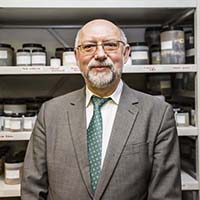
Prof. dr hab. Jerzy Błoszyk
Adam Mickiewicz University
Faculty of Biology
Uniwersytetu Poznańskiego 6
61-614 Poznań, Poland

Dr inż. Marcin Lawenda
Poznan Supercomputing and Networking Center
Supercomputing Department
ul. Jana Pawła II 10
61-139 Poznań, Poland
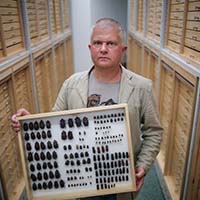
Dr hab. Szymon Konwerski
Adam Mickiewicz University
Faculty of Biology
Chair of Natural History Collections
Uniwersytetu Poznańskiego 6
61-614 Poznań, Poland
Developed with
Try CollMan with your own collection
Free to use. No installation required. The methodology is published and reproducible.
Start an assessment Read the paper